27/08/2026
Share
Building a brand from scratch is difficult. Updating an existing one, with decades behind it and an established place in the minds of its customers, is a different kind of challenge. And a more delicate one.
When a brand has no past, any direction is possible. There is nothing to break. But when a brand has been recognisable for generations, every decision carries a question that does not appear in the brief: what part of this is heritage and what is just inertia?
That is the distinction that underpins the entire job. Not everything old deserves protection, and not everything that gets in the way is dispensable. There are elements that have aged poorly and are best let go. And there are others — a colour, a proportion, a gesture — that are the reason why someone recognises the brand without reading the name. Confusing the two is the mistake that ruins the updating of a historic brand: either it freezes in the past for fear of making changes, or it changes so much that it ceases to be itself.
The real work, then, is not to design. It is to decide before designing.
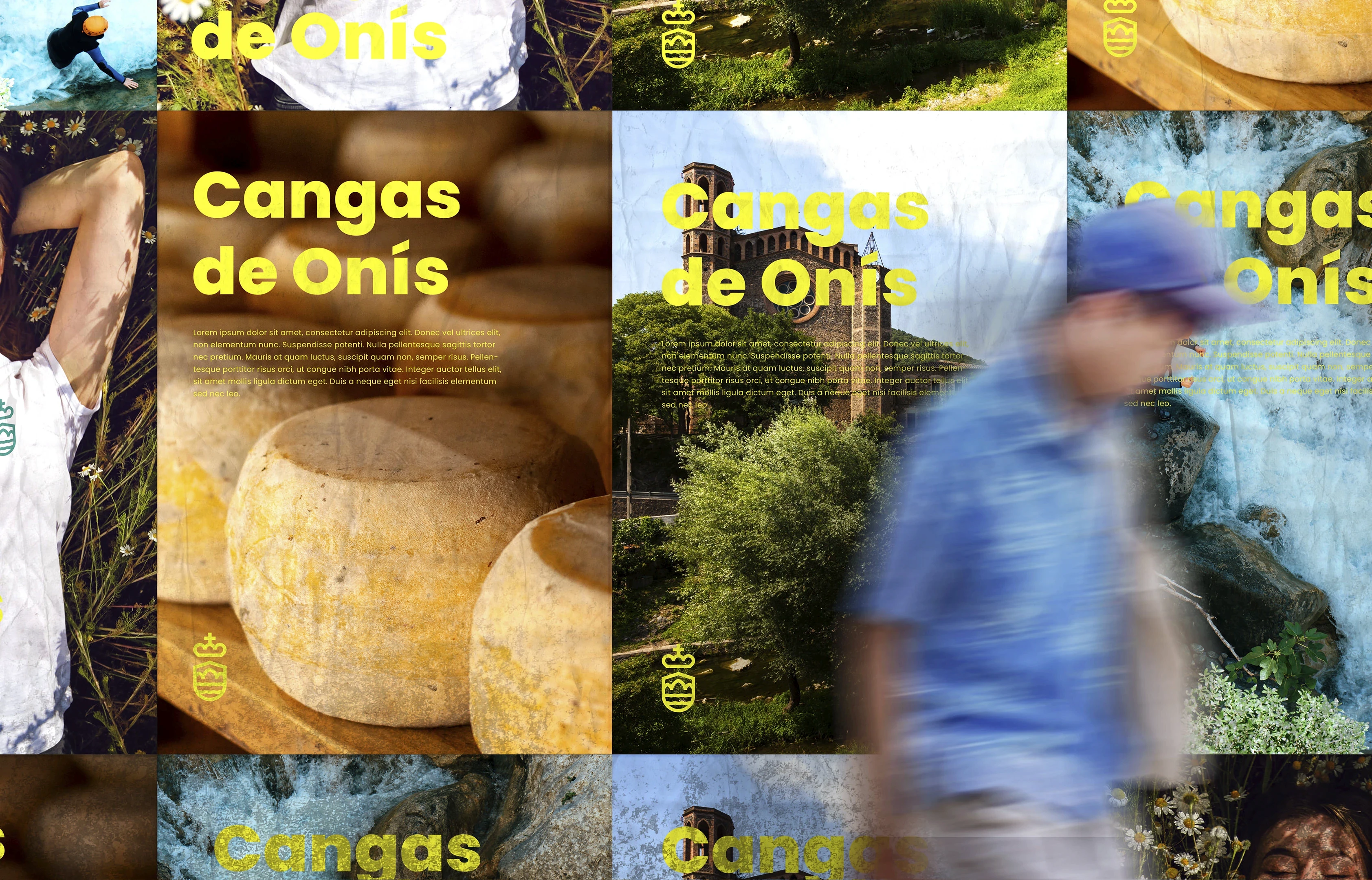
We saw this clearly in the identity of Cangas de Onís. A territory with a dense historical legacy does not need a proposal that draws attention to itself. It needs order and continuity. The intervention did not seek novelty; it sought to clarify what was already there, and to let the essence of the place express itself without noise. Updating, there, was above all about knowing what not to touch.
The same criteria, in a different field, guided the work with Señorío de Nava. A historic winery with an established product, which did not need to reinvent itself but rather to find the axis that already lived within it. The decision was not aesthetic. It was about defining what place that brand occupies in the lives of those who drink it, and sustaining it.
That is why an established brand is not approached as a blank canvas. It is approached as an inheritance: something received with both the good and the outdated mixed together, and whose value depends on knowing how to separate them.
To update well is not to make an old brand look new. It is to ensure it remains itself in a time that has changed. The former is noticed immediately and ages just as quickly. The latter is what makes a brand endure.